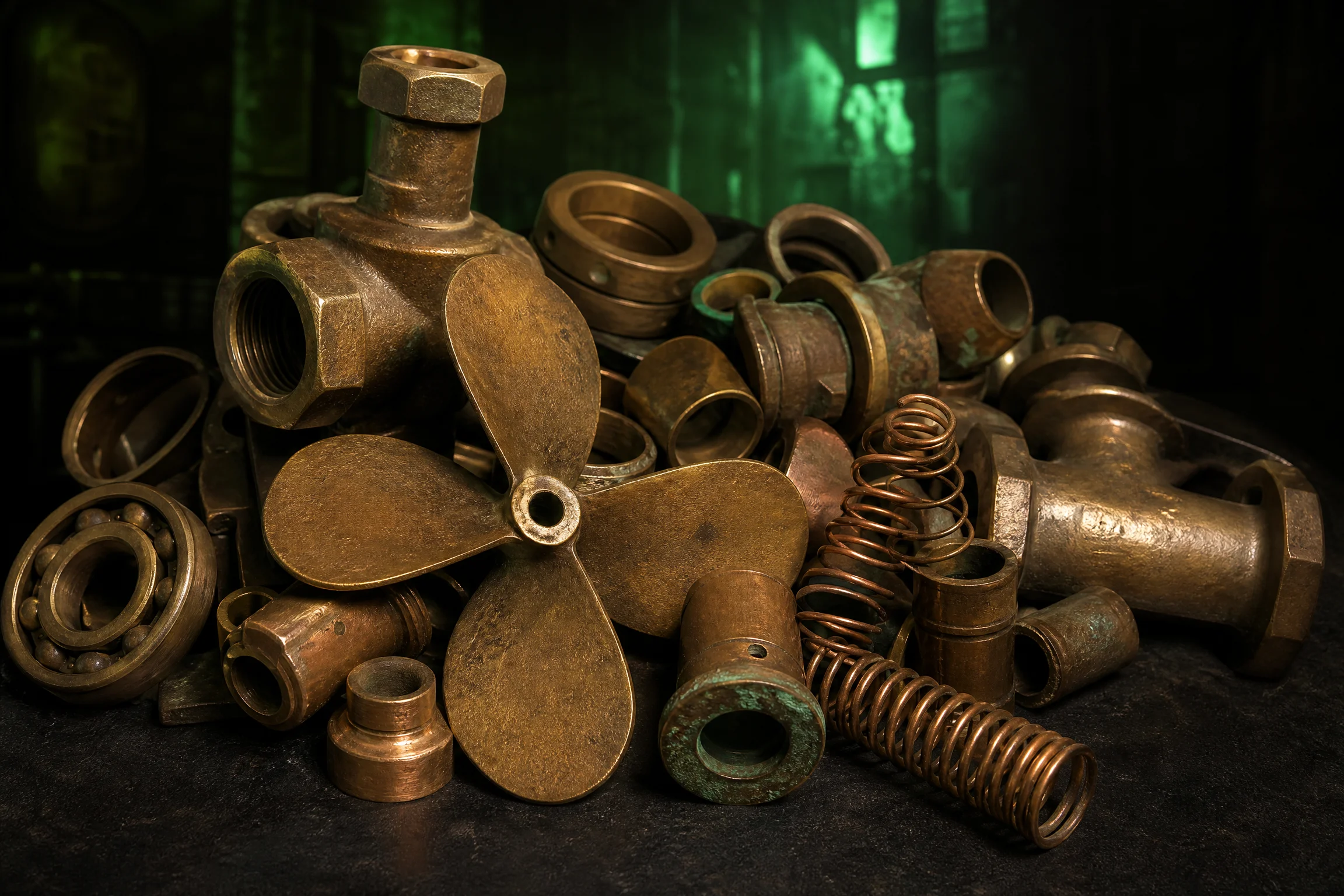
We buy all grades of scrap bronze — phosphor bronze, aluminum bronze, manganese bronze, silicon bronze, and tin bronze. Bronze is a premium non-ferrous scrap metal found in bearings, bushings, propellers, bells, and industrial components. Call Sean at 754-310-2984 for today's bronze prices.
⚡ Instant estimate · No sign-up · Prices updated daily
Prices updated regularly. Call 754-310-2984 for a confirmed quote on your specific material.
| Grade / Type | Description | Price |
|---|---|---|
| Phosphor Bronze | C51000, C52100 — springs, connectors | $3.80–$4.50/lb |
| Tin Bronze (Bearing Bronze) | C90300, C93200 — bearings, bushings | $3.20–$4.20/lb |
| Aluminum Bronze | C95400, C95500 — marine, heavy-duty | $2.70–$3.20/lb |
| Manganese Bronze | C86300 — gears, propellers | $2.50–$3.00/lb |
| Silicon Bronze | C65500 — fasteners, marine hardware | $3.50–$4.00/lb |
| Statuary Bronze | Art castings, monuments, bells | $2.80–$3.50/lb |
| Leaded Bronze | C93200 — low-speed bearings | $2.50–$3.00/lb |
| Naval Bronze (G Bronze) | C92200 — valves, pump bodies | $3.00–$3.50/lb |
Bronze is a family of copper-based alloys that have been used for over 5,000 years. Unlike brass (copper-zinc), bronze is primarily a copper-tin alloy, though modern bronze alloys may also contain aluminum, manganese, silicon, or phosphorus. Bronze is harder, more corrosion-resistant, and generally more valuable than brass as scrap. Its superior wear resistance makes it the material of choice for bearings, bushings, gears, and marine components.
Phosphor bronze (copper-tin-phosphorus) is used in springs, electrical connectors, bellows, and precision instruments. It commands the highest scrap price among common bronze alloys due to its high copper and tin content. Aluminum bronze (copper-aluminum) is used in marine propellers, pumps, and heavy-duty bearings — it is extremely corrosion-resistant in seawater. Manganese bronze is used in ship propellers, gears, and structural components. Silicon bronze is popular for fasteners, marine hardware, and welding rod.
Industrial maintenance generates large quantities of bronze bearings and bushings from pumps, motors, and rotating equipment. Marine applications produce bronze propellers, through-hull fittings, and seawater valves. Construction and demolition yields bronze door hardware, plaques, and architectural elements. Bell foundries and churches produce cracked or damaged bronze bells. Art studios and foundries generate bronze casting sprues, gates, and defective castings.
Bronze is non-magnetic, has a reddish-brown to golden color (darker than brass), and develops a green patina (verdigris) when exposed to weather. It is harder than brass and produces a clear ringing tone when struck. The easiest way to distinguish bronze from brass is color — bronze tends toward reddish-brown while brass is more yellow-gold. For precise identification and maximum value, we offer free XRF alloy analysis for large lots.
Separate bronze from brass, as bronze typically pays more. Remove any steel, iron, or non-metallic attachments. Keep different bronze alloys separate when possible — phosphor bronze is worth significantly more than leaded bronze. For large bearing replacements or propeller changes, contact us before disposal to ensure you receive the correct alloy-specific pricing rather than a generic "mixed bronze" rate.
Call Sean directly for an immediate cash offer. We respond within 2 hours.
Fill out the form below for a free quote within 1 hour. Or call us at (754) 310-2984
Get an instant estimate — select your metal, enter weight, see your result.
Estimates only. Call 754-310-2984 for a confirmed quote.
Related sites in our network for factory-built structures, jobsite offices and container conversions.
Portable Guard ShacksGuard shacks and booths, including ballistic-rated packages.Guard Shacks For SaleGuard shacks and guard booths for sale, delivered.Shipping Container ShedsContainer sheds and storage conversions, priced by shell and package.Comparing materials? See every grade side by side on our current scrap metal prices page, updated daily.
Today's Scrap Metal Prices Price Calculator