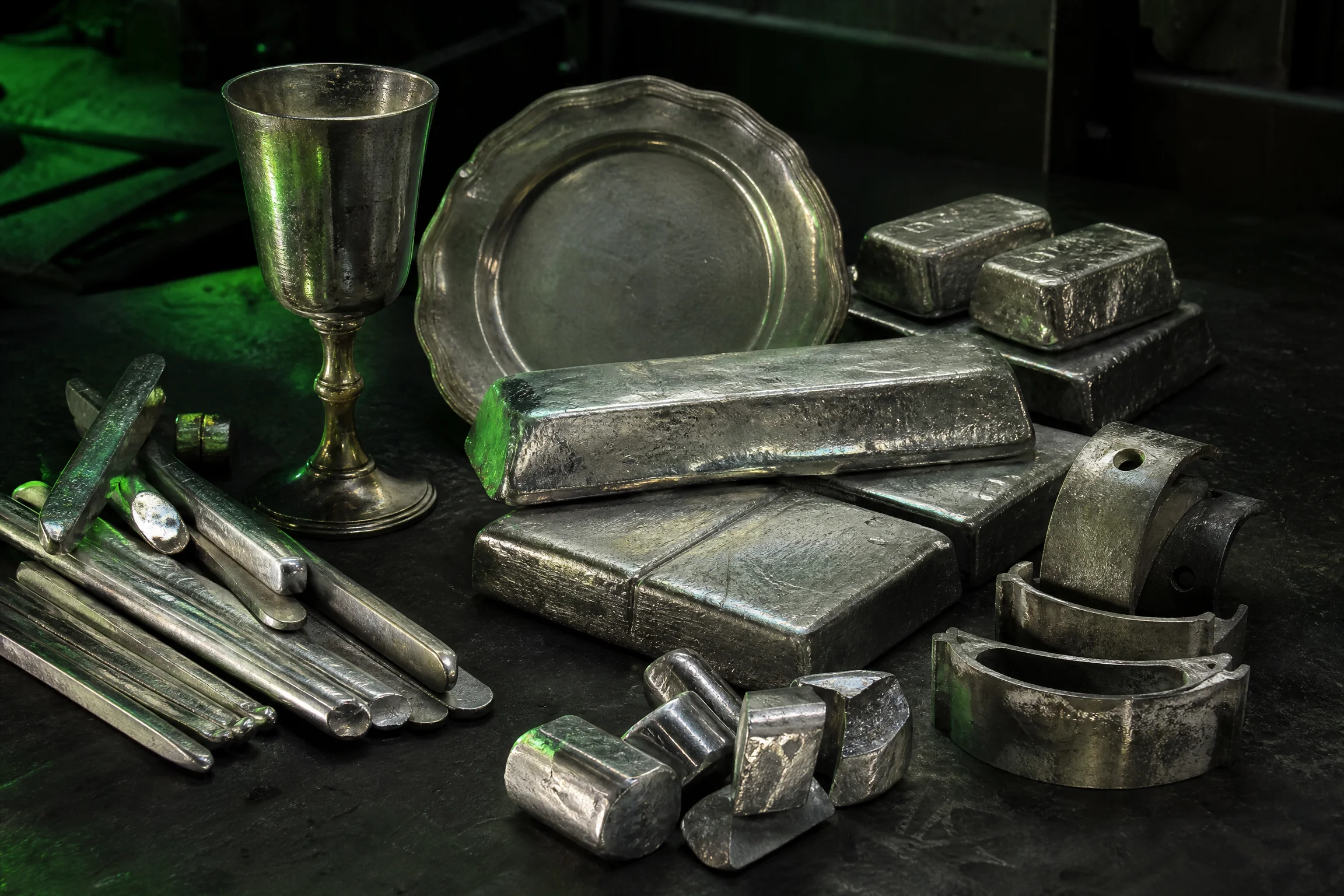
We buy all forms of scrap tin — tin-plated steel cans, tin-lead solder, babbitt metal, pewter, and pure tin. Note that most 'tin cans' are actually tin-plated steel and are priced as ferrous scrap. Pure tin and tin alloys command significantly higher prices. Call Sean at 754-310-2984 for today's tin prices.
⚡ Instant estimate · No sign-up · Prices updated daily
Prices updated regularly. Call 754-310-2984 for a confirmed quote on your specific material.
| Grade / Type | Description | Price |
|---|---|---|
| Pure Tin (Bar/Ingot) | 99%+ purity tin ingots | $10.00–$12.00/lb |
| Tin-Lead Solder (50/50) | Plumbing solder, bar solder | $4.00–$5.00/lb |
| Tin-Lead Solder (60/40) | Electronics solder, wire solder | $4.50–$5.50/lb |
| Babbitt Metal | Bearing metal, tin-based alloy | $3.50–$5.00/lb |
| Pewter | Decorative items, 85–99% tin | $3.00–$4.00/lb |
| Tin Cans (Steel) | Tin-plated steel food cans | $0.05–$0.07/lb |
| Tin Foil (Pure) | Actual tin foil (not aluminum foil) | $8.00–$10.00/lb |
| Block Tin | Old tin blocks, printing type metal | $6.00–$8.00/lb |
Tin is a relatively rare and valuable metal that has been used for thousands of years. Despite common usage of the term "tin can," most modern cans are actually steel with a very thin tin coating (less than 0.5% tin by weight). True tin scrap — solder, babbitt, pewter, and pure tin — commands significantly higher prices due to tin's market value of approximately $14–$16 per pound on the London Metal Exchange.
The most common form of tin scrap in industrial settings is tin-lead solder, which is generated by electronics manufacturing, plumbing, and HVAC work. Solder typically contains 50–63% tin and 37–50% lead, making it valuable for both metals. Babbitt metal is a tin-based bearing alloy containing tin, antimony, and copper — it is found in large industrial bearings, turbine bearings, and marine engine bearings. Pewter is 85–99% tin and is found in decorative items, tableware, and antique pieces.
It is important to understand that "tin cans" (food cans, beverage cans) are actually steel with a microscopic tin coating. These are priced as ferrous scrap at $0.05–$0.07/lb — the tin content is negligible. True tin items are non-magnetic, very soft (you can bend pure tin easily), and have a bright silvery appearance. When bent, pure tin produces a characteristic "tin cry" — an audible crackling sound caused by the deformation of tin crystals.
Electronics manufacturing and repair generates tin-lead solder dross and wave solder residue. Plumbing contractors accumulate tin-lead solder from pipe joints. Industrial maintenance produces babbitt metal from bearing replacements. Antique dealers and estate sales yield pewter items. Printing shops (letterpress) may have type metal containing tin, lead, and antimony. Organ pipe builders and restorers work with high-purity tin.
A magnet test is the first step — pure tin and tin alloys are non-magnetic, while tin-plated steel is magnetic. Weight is another indicator: tin is denser than aluminum but lighter than lead. For solder and babbitt, the exact composition determines value, and we offer free XRF analysis for large lots to determine precise tin content and provide the best possible price.
Call Sean directly for an immediate cash offer. We respond within 2 hours.
Fill out the form below for a free quote within 1 hour. Or call us at (754) 310-2984
Get an instant estimate — select your metal, enter weight, see your result.
Estimates only. Call 754-310-2984 for a confirmed quote.
Related sites in our network for factory-built structures, jobsite offices and container conversions.
Portable Guard ShacksGuard shacks and booths, including ballistic-rated packages.Guard Shacks For SaleGuard shacks and guard booths for sale, delivered.Shipping Container ShedsContainer sheds and storage conversions, priced by shell and package.Comparing materials? See every grade side by side on our current scrap metal prices page, updated daily.
Today's Scrap Metal Prices Price Calculator